A Life in the Clouds, A Heart on the Ground: 17 Untold Anecdotes of Martyr Abbas Babai
On the occasion of the martyrdom anniversary of Major General Pilot Abbas Babai, the former Deputy of Operations for the Air Force of the Islamic Republic of Iran, we present a selection of untold memories from the historical monthly Shahed-e Yaran (Issue 33, September 2008).
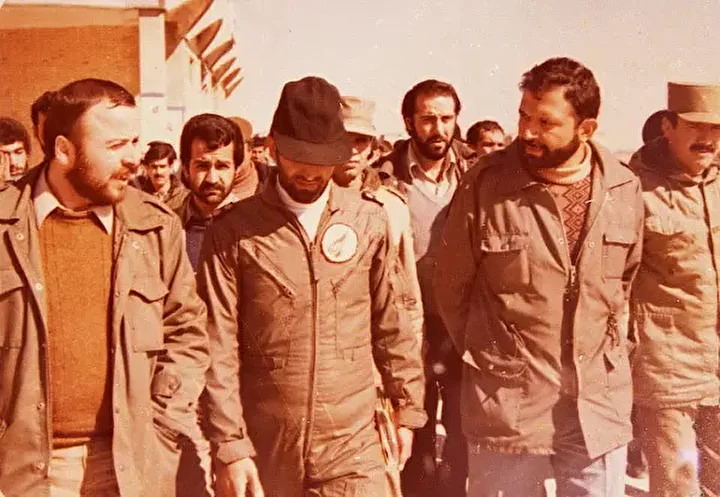
Martyr Abbas Babai, a distinguished commander known not only for his tactical genius but for his profound humility and spirituality, remains an iconic figure in Iran’s defense history. Below are selected accounts from his colleagues, family, and officials that shed light on the multi-dimensional character of this celebrated martyr.
1. A Transformation of Spirit
As recounted by the Leader of the Islamic Revolution, Ayatollah Khamenei:
“There was a pilot who was initially at odds with the revolutionary system. Martyr Babai befriended him, treated him with kindness, and even took him to the Dua-e Kumayl (a midnight prayer) ceremony. Despite being senior to Babai in rank, this pilot was spiritually transformed by him. Babai once told me, ‘I saw his shoulders shaking from crying during the prayers. He turned to me and said: Abbas, pray that I become a martyr.’ This was told to me by Babai after that pilot’s martyrdom. Babai was a believer, a devoted soldier, and a selfless man who never prioritized his own interests, only those of the Revolution and Islam.”
2. Tactical Innovation: Converting the F-14
As recounted by Hojjat al-Islam Mohammadi Golpayegani:
“In Isfahan, Martyr Babai would secretly identify underprivileged families and leave food baskets at their doors without them knowing his identity. One of his most significant military achievements was converting the F-14 Tomcat—a sophisticated, defensive interceptor relying on expensive, long-range Phoenix missiles—into a ground-attack bomber. This was an innovation never attempted even by the aircraft’s manufacturer. His technical team supported this initiative, making the F-14 both an interceptor and a bomber, which proved vital in the final years of the war.”
3. The Anonymous Soldier
As recounted by Major General Yahya Rahim Safavi:
“One day, Babai came to the headquarters dressed as a simple volunteer soldier (Basiji), his hair shaved, ready for congregational prayers. Even though I urged him to go to the front row, he refused, preferring to remain anonymous. He was so unassuming that no one would guess they were standing next to the Air Force’s Deputy of Operations.”
4. A Hidden Act of Kindness
As recounted by the mother of Martyr Abbas Babai:
“One night at 10:00 PM, Abbas called me to the car. It was loaded with rice and oil. He took me to a dark alley in Hadi-Abad, pointed to a house, and asked me to leave the supplies at the door, ring the bell, and return quickly. When I returned, he had turned off the car lights so the woman who opened the door wouldn’t see us and feel embarrassed. As we drove away, I could hear him quietly weeping behind the steering wheel.”
5. Leader and Servant
As recounted by Brigadier General Pilot Seyed Esmail Mousavi:
“During a major maneuver in Dezful, Babai was the primary architect of the operation. Yet, when it was time to eat, he wasn’t at the officials’ table. We found him in the kitchen sitting with an old worker, eating whatever simple food the worker was having. He refused to sit anywhere else. This was why he became ‘Babai’ (a term of endearment).”
6. A Prophetic Dream
As recounted by Sedigheh Hekmat, his wife:
“One day, I had a dream about Abbas’s martyrdom. I was in a massive crowd of Air Force personnel, calling out for Abbas to help me with our son, Hossein. Instead of Abbas, his photograph appeared in the crowd, with a small, bloodless scratch on his throat. After his martyrdom, when I touched his casket, I wept and said: ‘Abbas, you sent me to the House of God (Hajj) while you went to be with God Himself.’”
7. Blinding the Enemy’s Spy Network
As recounted by Brigadier General Pilot Hossein Chitforoush:
“Babai understood the enemy perfectly. To counter American-planted intelligence networks that would report our flight paths, causing our planes to be targeted before reaching the border, he established ‘Raad Headquarters’ in the south. This cut off communication with Tehran and effectively blinded the enemy’s intelligence network, leading to 300 successful sorties without a single incident.”
8. Striking French Mirages
As recounted by Brigadier General Pilot Hamed Mighani:
“Babai and Martyr Sattari designed an escort system for oil tankers that boosted the morale of our frontline forces. Using this method, they managed to strike French Mirage aircraft—advanced jets that Iraq relied upon heavily—despite the presence of AWACS radar, naval monitors, and satellite surveillance covering the region. When I heard the news of his martyrdom on the day of Eid al-Adha, I only said: ‘He deserved it. He reached his goal.’”
9. Finding Safer Skies
As recounted by Brigadier General Pilot Habib Baghaei:
“After an incident where a C-130 crashed into the mountains, killing 73 wounded soldiers, Babai was devastated. We flew over the Persian Gulf at extremely low altitudes—barely 5 meters above the water—to chart new, safer air corridors. He endured the danger and the stress of the mission until a safe path was established.”
10. The Shrine as a Navigator
As recounted by Brigadier General Pilot Habib Baghaei:
“One night, Abbas took me to a remote desert location where we found an old, small shrine. We prayed there with great fervor. Later, during the Valfajr-8 operation, that very shrine became a crucial navigational waypoint for our pilots flying to and from the Fao peninsula.”
11. Divine Protection
As recounted by Aghdas Babai, his sister:
“My father was a Ta’zieh (passion play) director. He had a deformed finger on his right hand, the reason for which he kept secret for years. After Abbas’s martyrdom, he told us: When I was 15, I was playing in an old bathhouse furnace, and I slipped toward the fire. Mid-air, I heard a voice: ‘Esmail, do not be afraid; we are saving you for Abbas’s sake.’ I landed in the fire but was completely unharmed.”
12. Lamentation in the Cockpit
As recounted by Brigadier General Pilot Rouhollah Aboltalebi:
“Once, Babai decided to sit in the rear seat of an F-14. He told me he wanted to recite the story of Karbala (the martyrdom of Imam Hussein). Looking in the mirror, I saw him unbuckle his safety harness, sit cross-legged in the cramped cockpit, and begin his lamentation. It was an otherworldly experience in the middle of a combat flight.”
13. A Strategic Insight into Tabas
As recounted by Brigadier General Pilot Davoud Askari-Fard:
“Many attribute the failure of the U.S. operation in Tabas solely to the sandstorm. Babai, however, believed the true miracle was the American lack of strategic intelligence. He argued that the U.S. failed because it didn’t occur to them to continue the operation from their mobile platforms, like aircraft carriers. He often said, ‘God has blinded our enemies with their own arrogance.’”
14. “It was Allah who threw”
As recounted by Colonel Pilot Fazlollah Javidnia:
“During an aerial engagement, I was locked onto an enemy target, but I was worried because Abbas was in the flight path, acting as bait. Suddenly, Abbas maneuvered sharply, clearing the path. I fired, and the enemy plane exploded. Over the radio, I heard Abbas shouting ‘Allahu Akbar!’ When I asked him, ‘Do you realize what you just did?’ he quoted the Quran: ‘…and you threw not, when you threw, but it was Allah who threw.’”
15. Against Luxury
As recounted by Major Ali Asghar Nazari:
“Babai lived with the simplicity of the least privileged in society. When I suggested we use a luxurious, unused car from the Dezful base to protect high-ranking officials, he simply replied: ‘You want to protect these figures with a car? God protects them.’ He refused to allow religious figures to indulge in luxury or be perceived as using their status for worldly gain.”
16. Prayer in the General’s Office
As recounted by Colonel Valiollah Kalati:
“During pilot training in the U.S., Babai’s career hung in the balance due to an unfavorable report. He was summoned to a U.S. General’s office. While waiting, the time for prayer arrived. Babai chose not to postpone his prayer, even when the General returned to find him in the middle of it. Impressed by his integrity and honesty, the General signed his documents and congratulated him.”
17. Jihad Over Hajj
As recounted by a colleague and friend, Hossein Rezaei:
“We were supposed to go on the Hajj pilgrimage with Abbas and his wife. A few days before, he told me he couldn’t leave the frontlines because, ‘The front is more obligatory right now.’ His wife went alone, and it was there that she heard the news of his martyrdom. He sacrificed the beauty of the Kaaba for the higher cause of defending his country.”